If you follow the history of invention, you’ll find two things typically happen: first, it can take a long time to develop an invention that works. Second, it can take a long time to evolve it. Just think about how the television evolved from black and white to color to 4K over the last six decades.
It’s definitely true in the retail industry that relies on innovations, from managing customer experience at the front of the store to ensuring the supply chain is delivering to the back of the store. All the while, retailers also have to manage loss due to product damage, theft, aging inventory and more. These problems have only been amplified with an onslaught of new technologies ever descending on retail operations.
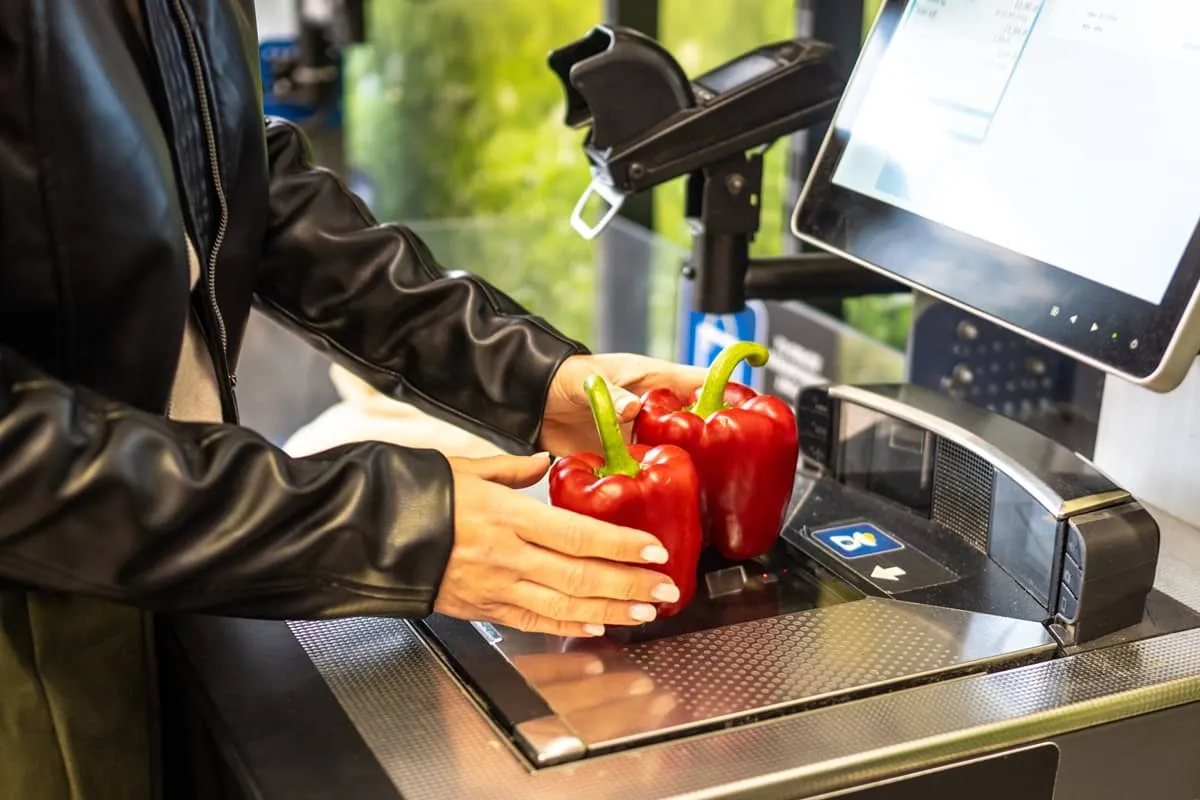
Arguably, the greatest challenge the retail industry faces today is making the checkout process easy, fast and accurate. It’s also a place of heavy innovation. Merchants covet Amazon’s cashier-less retail model nearly as much as they fear it. Indeed, the notion of “frictionless” checkout has created its own cottage industry from myriad cameras mounted to capture every corner of a store, to shelf sensors that know when a product has been removed.
We’ve seen countless demonstrations of “frictionless” checkout solutions over the last few years at the National Retail Federation’s Big Show. And while each solution works in extremely controlled circumstances, not many scale to the point where they can be rolled out across a grocery chain of 500 stores without significant infrastructure expense.
Would radio frequency identification (RFID) be worth considering, too? To answer that question, let’s remember how we got here.
The forgotten history of self-service retail
Not that long ago, grocery stores stamped a price on a box of cereal and “rung” it up by hand-keying the price at the checkout counter. Take the Great Atlantic and Pacific Tea Company, or A&P, for example. It was one of the largest chains in the 1930s with 15,709 locations at its peak. At the time, many of those stores were “full-service”: customers asked for items at the front counter, and the store clerk would pick products from the shelf or measure a quantity of flour from a bin, tally the items and take payment. Hand-keying prices didn’t pose much of a problem, because the typical order had only a few items.
But full service would become a relic, thanks to a seed change that had taken root in 1916. Back then, an entrepreneur named Clarence Saunders introduced the concept of a self-service grocery store with the opening of his first Piggly Wiggly location in Memphis, Tennessee. Self-service, in contrast to full-service, allowed customers to roam the store freely, selecting items they wanted from a stocked shelf or stack on the floor and taking those items to a central checkout. In that way, self-service ushered in the concept of larger stores that could hold more goods.
When former Kroger employee Michael J. Cullen opened a 6,000 square foot store in New York City in August of 1930, the age of the supermarket began. To encourage shoppers to buy more items, Sylvan Goldman, who owned the Humpty Dumpty supermarket chain in Oklahoma, made a shopping cart out of a chair on wheels and a basket in the seat.
In June of 1937, the first shopping carts were introduced and the grocery industry never looked back. Bigger carts meant consumers could buy more, which led to increased assortments and larger locations. But then a new problem presented itself. Moving basketfuls of items overwhelmed the old-style, hand-keyed checkout, and the problem of long lines at checkout and the question of price entry accuracy quickly emerged.
Neither problem would be solved for another 44 years.
It wasn’t until the invention and practical use of the Universal Product Code, or UPC, that the problem of slow checkout and pricing inaccuracies found a solution. Now, checkout speed and data integrity were now at the forefront.
UPC: A technological game changer

UPC-A Format

GS1 DataBar

RCA’s Bull’s Eye Label
Possibly one of the greatest innovations for point-of-sale was the introduction of the UPC. You know, that ubiquitous barcode that’s printed on everything from boxes of cereal to cans of soup. There are all kinds of barcode formats as well – from the common UPC-A, which is typically printed as a string of digits below a set of vertical bars, to the GS1 DataBar used on coupons and loose produce like apples and bananas. Today, you'll rarely find a product in any store that does not have a barcode on it. It wasn’t always like that.
It might come as a surprise today, but the UPC had a rough beginning. Patented in 1952, variations of scannable codes included RCA’s “bull’s eye” label and the now-familiar strip of black bars (usually with numbers beneath). After years of experimentation and the development of specialized laser scanners, the UPC passed its first commercial test. The pivotal moment came at a Marsh Supermarket in Ohio. On June 26, 1974, a 10-pack of Wrigley’s Juicy Fruit gum was “scanned” at a cash register for the first time, and history was made. Despite this success, the UPC might have been lost in history.
The fact that a barcode could be used to purchase an item wasn’t enough to bring the UPC into widespread use. Products had to be marked (often manually), and retail systems had to be upgraded so they could scan items. What made the UPC the de facto standard today was an industry initiative to use it to solve a major business problem, the roots of which go back to 1937: slow, labor-intensive, and many times inaccurate customer checkout.
It took the vision and thought leadership of one individual to move the UPC from concept to execution. Alan Haberman is credited with ushering in the acceptance and use of the UPC. He rallied other grocery store executives and manufacturers to adopt the new coding method. In 1973, Haberman became a founder and board member of the Uniform Code Council, which later became Global Standards 1 (GS1), an organization that helps companies solve supply chain problems through the adoption and implementation of agreed-to standards.
History repeats
What has worked so well for retailers over the past 44 years is showing signs of its age. Despite its practical nature, the UPC suffers from many flaws. UPCs don’t identify an individual item as a tag with a serial number would. The UPC on a can of beans is the same for every other can of the same size, variety and manufacturer. And it doesn’t help with inventory. Retailers have to count each can on the shelf to determine actual on-hand quantities.
There’s another problem with the UPC. To use them, every item must be visually scanned by something that can see the UPC. So, if someone pockets a pack of chewing gum and walks out of the store unnoticed, the retailer has no idea it’s gone.
Lately, there has been a lot of talk about frictionless checkout using advanced technologies to keep that pack of chewing gum from walking out unpaid. True frictionless checkout allows the patron to bag groceries while walking the aisles, leave the store and have their account automatically charged without any fuss. Theoretically, someone would not be able to pocket a pack of chewing gum without being charged on the way out of the store.
It's the notion of the Amazon cashier-less model. But the monumental cost of infrastructure and integrating complex technology to achieve that just isn’t practical today. Consider the cost of rolling out that technology to a chain of 400 (or more) 75,000 square foot supermarket locations. If it were practical, it would have been done by now.
Eventually that technology will evolve, and the costs will come down, and learnings from its use will inform future adoption. But what do we do today if waiting years isn’t the answer? Retailers need a bridge: a solution that will carry them forward yet be compatible with future technologies.
RFID:真の架け橋となる
1983年、チャールズ・ウォルトンは、 無線周波数識別(RFID)と呼ばれる技術の特許を取得しました。過去38年間で、RFIDは大きく進化し、サプライチェーン管理をはじめ、多くの用途で日常的に使用されています。簡単に言えば、RFIDは、個々の商品に、UPCと各商品を一意に識別するシリアル番号を記録したタグを付ける方法を提供します。そして、そのタグを遠隔で読み取る方法も提供します。これにより、小売業者はサプライチェーン全体で商品を追跡・管理できます。しかし、この技術は単にUPCをスキャンするよりも複雑です。
では、RFIDはどのように機能するのでしょうか?話を簡単にするために、ここではパッシブRFIDに焦点を当てます。パッシブRFIDは、内部電源に頼らず外部から電力を供給されるため、小売業に適しています。RFIDで使用されるコンポーネントは、送信機と受信機です。これらは、信号を放送するラジオ局と、その放送信号を受信するラジオのように機能します。
今日のRFIDは、値札に隠された、またはパッケージに埋め込まれた小型の無線機とアンテナで構成されています。この無線機は独自の電源を持っていませんが、特殊な無線周波数パルスが送信されると、その信号を利用して自らを起動します。起動すると、無線機は自身のデータを送信します。無線周波数パルスを発信したデバイスは、その送信を受信し、データを処理のためにコンピューターに送ります。このデータは、UPCとシリアル番号を含む電子製品コード(EPC)と呼ばれます。
簡単そうに聞こえますよね?まあ、ほとんどはそうです。RFIDは、技術の後の世代で大部分が克服された問題に悩まされてきました。例えば、缶詰の豆に貼られたRFIDタグは、金属がタグのアンテナに干渉するため、無線周波数パルスを常に受信できるとは限りません。その他にも、生肉のパックや液体のボトルといった密度の高い商品に貼られたRFIDタグは、密度の高い物体が無線周波数を遮断するため、問題となることがあります。また、金属製のショッピングカートに積み重ねられた商品に貼られたRFIDタグは、カート自体の金属製のカゴによって遮蔽されてしまいます。
これらの問題は、より優れたRFIDタグ、多次元アンテナ、超高周波電波、そしてほぼあらゆる向きでRFIDタグを読み取れるようにするその他の技術によって、大部分が解決されています。そして、ショッピングカートの問題を解決するには、プラスチック製のものに交換すればよいのです。
技術、標準、タグ

RFIDタグの例
RFIDとそのタグでの利用について少し学んだところで、この技術についてはさらに理解すべきことがあります。開発の初期段階では、RFIDは導入コストが高く、上記で述べたようにやや信頼性に欠けるという評判がありました。これらの議論は、UPCの開発中にも当てはまりました。
初期世代のRFIDでは、高価なタグが大量に巻かれたロールが必要で、それらを各アイテムに手作業で貼り付ける必要がありました。タグは一つずつ更新しなければならず、そのプロセスは遅いものでした。それに対し、現代のパッシブRFIDタグは読み取り専用バージョンも存在します。 読み取り専用タグ 大量生産が可能で、1枚あたりわずか1セント(量によってはそれ以下)で製造できます。また、読み取り専用タグは製造後に変更することはできません。これは重要です。なぜなら、従来のRFIDタグはスマートフォンなどの簡単なもので変更できてしまうからです。
アラン・ハバーマンが設立した標準化団体を覚えていますか?彼のおかげで、RFID技術の利用はGS1を通じて標準化されています。以前議論したEPC(電子製品コード)は、アイテムレベルの識別を提供します。シリアル化されたグローバル取引識別番号(SGTIN)は、従来のUPC/EANデータと、重複読み取りの判別(その他にも用途があります)に使用できるシリアル番号を提供します。
実用化と業界での活用
消費財(CPG)業界の高速パッケージング要件に最適なのは、読み取り専用RFIDタグです。これらのタグは発注することもできますし、大規模なCPG企業であれば、製造工程に合わせて生産ラインに入る前に特殊な設備を使って現場で作成することも可能です。
タイド洗剤の製造元であるプロクター・アンド・ギャンブル(P&G)を例にとってみましょう。P&Gは、他のCPG企業が現在、電子商品監視(EAS)タグで行っているのと同様に、製造するタイドのボトルすべてにRFIDを取り付けることができます。初期費用はかかるものの、追加費用は比較的低く抑えられるでしょう。そして、長期的には、RFIDタグとその取り付けプロセスは、大量生産によってコストが削減され、1品あたり1セント以下にまで近づく可能性があります。
今後どうすべきか?
2018年の調査によると、 小売業者の69%がRFIDの導入が大幅に進んでいると述べており、一部の小売業者は売り場でRFIDの実験を行っています。また、コンビニエンスストアのような限定的な品揃えの用途で、最近RFIDの試行が行われ、その技術が実用可能であることが証明されています。
今日、多くの製品でRFIDがサプライチェーン全体で利用されているものの、個別品目へのタグ付けはまだ広く普及していません。しかし、私たちは革命の瀬戸際にいます。~における新たな進歩が 銀ナノ粒子インク インクジェット印刷プロセスでRFIDアンテナを印刷することを可能にし、品質を損なうことなくタグのコストを非常に低くしています。その他の進歩も、タグあたりの価格を引き下げ続けています。
では、何が足りないのでしょうか?
もしかしたら、現代のアラン・ハバーマンのような存在が足りないのかもしれません。1970年代にアランがそうしたように、世界の主要な小売業者やCPG企業を擁護できる先見の明のある人物、つまりソートリーダーが必要です。簡単なことではありませんが、小売業者とCPG企業の両方が長期的な利益を得られるでしょう。
たとえば、メリットの1つを考えてみてください。ウォルマート、ターゲット、クローガーなどの小売業者は、数分で店舗全体の在庫を電子的に把握できるようになります。サイクルカウントやその他の労働集約的な在庫数確認方法(これらは完了までに何日も何時間もかかり、結果もまだ疑わしいものです)なしに、正確な手持ち在庫数を把握できるのです。
食品安全の観点から見ると、小売業者は、RFIDタグ付き製品のリコール品を買い手の玄関先まで追跡できるようになります。2019年だけでも、124件の リコール 2,000万ポンド以上の肉が関係していました。RFIDタグ付き製品であれば、個別のシリアル番号を持つすべてのパッケージが、製造元から印字されたレシートまで紐付けられます。小売業者は、ロイヤルティシステムを利用して、リコール対象製品の該当する顧客に迅速に通知できるようになります。
一方で、CPG企業や小売業者は、本来なら問題のない製品を廃棄する必要がなくなります。そして、他方では、人命を救うことにもつながります。また、レジでの会計を迅速、スムーズ、正確にするという小さな問題も忘れてはなりません。RFIDがあれば、その問題はあっという間に解決します。
RFIDの明白な利点をすべて考慮すると、次は何でしょうか?次なるアラン・ハバーマンよ、どこにいるのか?RFIDについて聞いたことはあるか?
この記事をシェアする
関連ブログ記事
小売・飲食業界の重要なトレンドに関する専門的な洞察をさらに詳しくご紹介します。