How retailers can drive better store performance with the right mix
By Nick East, VP, Edge - NCR Voyix
The growth of edge computing in retail is undeniable as more devices are connected in stores, and more applications depend on the data they create. The role of clouds and corporate data centres for crunching transactions and providing data insights is clear, and much time has been spent by retail IT teams determining an overall cloud strategy. Increasingly, however, their focus has turned to the large amounts of data processed at the “edge”, and not just transactional information: inventory, sensor, capacity, video, performance – across 10s to 100s of devices in each store. Never has the role of a retail store infrastructure in delivering the customer experiences of tomorrow been so important. This creates both a major challenge and an opportunity for the retailer: how to optimize edge systems and the data they create, and how to use that as a competitive advantage.
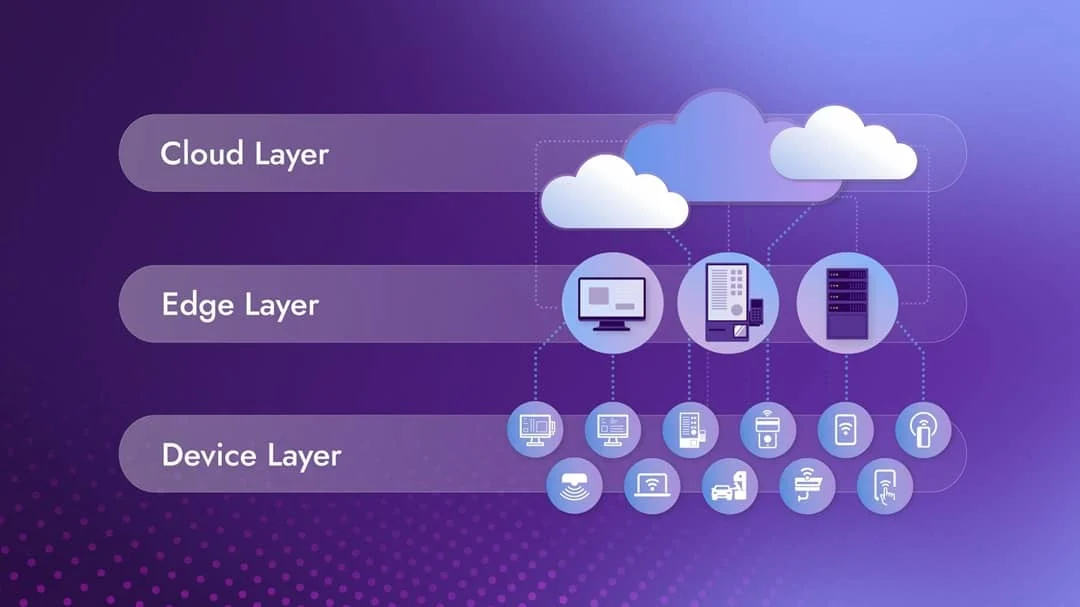
Edge technology, the systems that operate outside the cloud and corporate data center, form part of a bigger retail architecture that includes public cloud, SaaS solutions, eCommerce stacks, distribution centers, customer owned or leased data centers – all operating “above store” and right across the network to the front-line systems.
In a retail environment, without an Edge strategy, any Cloud strategy is at best incomplete, and at worst, destined for failure.
Many retailers are considering edge technology as the best approach to modernize their store infrastructure. Everyone agrees retail success requires a blend of cloud and edge technology, but should you take a “Cloud Out” or “Edge In” approach?
I’ll help you decide.
Use the right tools for the right jobs
The cloud, and in particular the combination of virtualization and containers, improved broadband and significant investment by hyperscalers – principally Google, Microsoft and Amazon – has transformed the way applications can be run and broken barriers to innovation. However, like any tool, cloud works well for some jobs but not others.

Edge, on the other hand, is designed to cope with conditions that cloud infrastructure was not intended to accommodate. Unlike data centers, edge infrastructure manages unreliable networking, where latency, jitter or availability issues are common, particularly in large distributed store estates. Store systems typically don’t operate in people-free, highly secure, air-conditioned server environments. Quite the opposite. Edge systems must process and control high volumes of checkout and payment data, weigh scales and kitchen systems, manage camera feeds with AI/ML operating in real time, and above all deliver high performance at peak hours, often running 24/7.
Ultimately, infrastructure designed for the cloud is a poor fit for the edge and vice versa. Cloud systems are typically designed to run a handful of large, universally available locations – sometimes referred to as “operating at cloud scale.” Conversely, edge systems are designed to run as many as tens of thousands of small, often poorly connected locations – considered “operating at edge scale.” At a high level, both require scalability and automation, but under the covers one is highly concentrated while the other is highly distributed.
For example, retail requires real-time processing, whether for video recognition at frictionless stores, shrink detection, product scanning or generating the latest personalized in-store promotional offers. Latency or costs imposed by high bandwidth demands cause friction, impacting both customer experience and the bottom line. Edge systems process data in real time. However, analyzing this data over a longer period requires serious offline data center/cloud horsepower that is best enabled by cloud systems.
With so many moving parts and a distributed store estate, edge infrastructure must be responsive, scalable and reliable. “Edge In” is the best approach for stores. In contrast, systems in the headquarters, above store data centers or eCommerce are more cloud-like and lend themselves better to a “Cloud Out” strategy.
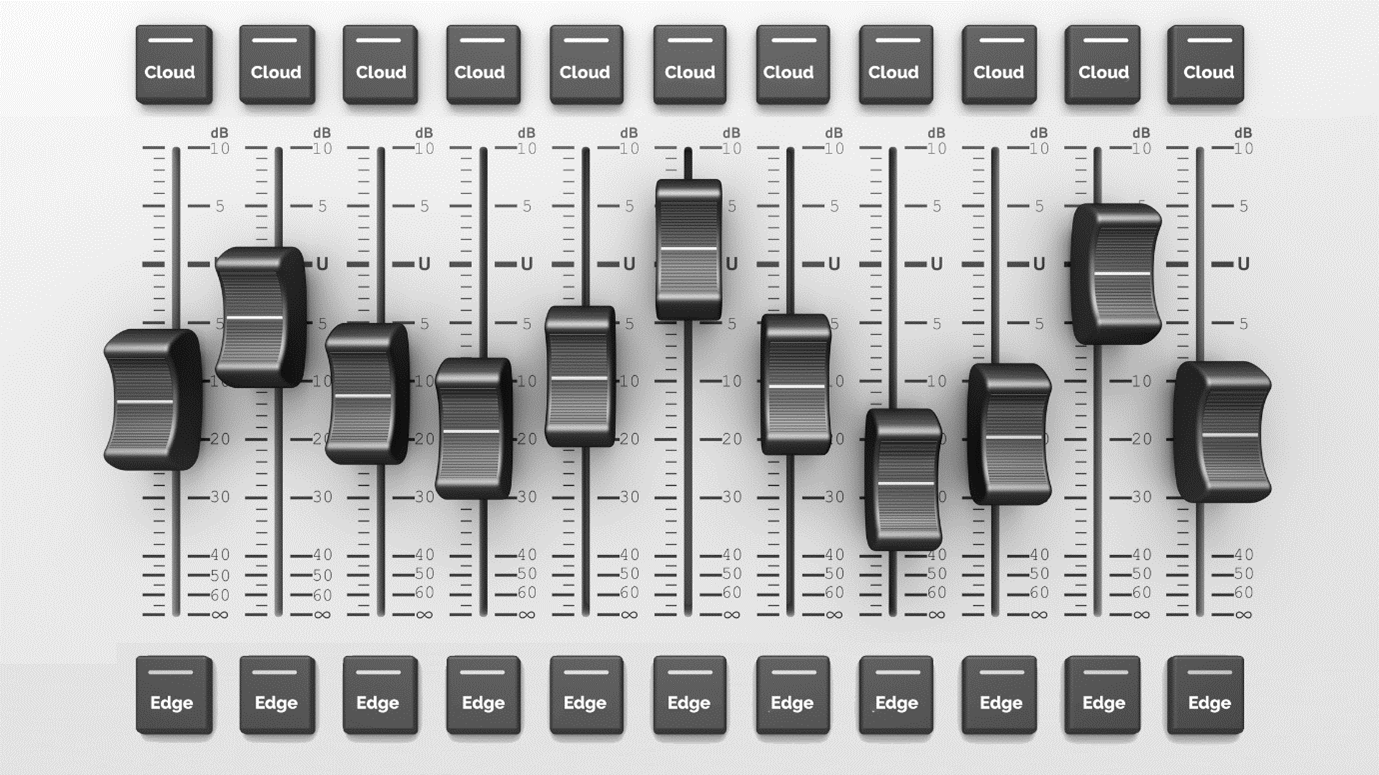
Don’t view it as a binary choice
The reality is you need to design a solution that works best for the store, at the edge, while also making the best use of the cloud. Cloud is great for managing offline data analysis, building learning models, processing big data, eCommerce and more, so it is integral to your design – but not on its own. If you want real-time promotions delivered to consumers in your store, you host the application at the edge to deliver instant responses, and you train the artificial intelligence (AI) algorithm in the cloud to push model changes back out to the edge.
Further, we need to clarify the use of the term cloud. Take cloud point-of-sale (POS), for example. POS represents one of the biggest use cases for edge computing. Millions of transactions are processed, but there are many potential failure points – switches, routers, networks, and cloud providers. If POS was a true cloud application – a web browser connected over the internet to a cloud – and connectivity dropped, there would be no POS in the store. For cloud POS to continue operating, it should be edge-enabled. Thus, in reality it’s a hybrid solution involving both cloud and edge.
Streamline the approach
If Cloud Out and Edge In methods are not mutually exclusive, a holistic approach is required to maximize the advantages of both. Only then are cost efficiencies obtainable.
Why stream all data 24/7 to the cloud when you could have a gateway function with the flexibility to select which data goes to the cloud and which runs at the edge? A hybrid approach simplifies operations.
Focus on business-based outcomes
Rather than edge computing competing with cloud computing, they complement and complete one another. In a retail store, edge is in some ways just a distributed cloud – but a vastly different type of cloud.
Cloud computing has delivered efficient technology resources and centralized applications on a pay-as-you-go basis. Hyperscalers are gradually figuring out how to push the most relevant parts of their technology out from those data centers into other clouds and data centers. But beware of adopting infrastructure that has been repurposed from cloud to edge. For example, you wouldn’t ask the engineering team that had built a large nuclear power station to use the same approach to build thousands of distributed wind turbines to generate energy hundreds of miles offshore. Edge requires tools designed for a different job.
Edge represents an opportunity to consolidate old infrastructure to drive efficiency and embrace new high-data, low-latency use cases to improve customer experience. You need to integrate your cloud and edge. In doing so, you can more easily deploy and manage applications where they are best placed without long development cycles, but with consistent policies and configuration across the whole architecture.
As retailers make this transition, the core focus should be on business benefits rather than trying to solve specific technology problems. Taking this approach enables you to quantify business outcome-based solutions with specific service level agreements (SLAs).
In sum, it’s not “Cloud Out” versus “Edge In” but how can the two approaches be best combined to maximize your in-store operations and drive success. By following these best practices and leveraging the expertise of the right providers, you’ll have the answer to this question in no time.
One final thought. Retailers want the same agility for their applications in the store as they have with their digital channels. Edge is the key enabling technology to achieve it.
Share this post
Related blog articles
Even more expert insights into important retail and restaurant trends.
How convenience retailers can create seamless fuel-to-store experiences that keep customers coming back
How retailers should split workloads between cloud and edge for real-time store operations

How to reduce shrink at self-checkout with visual AI